
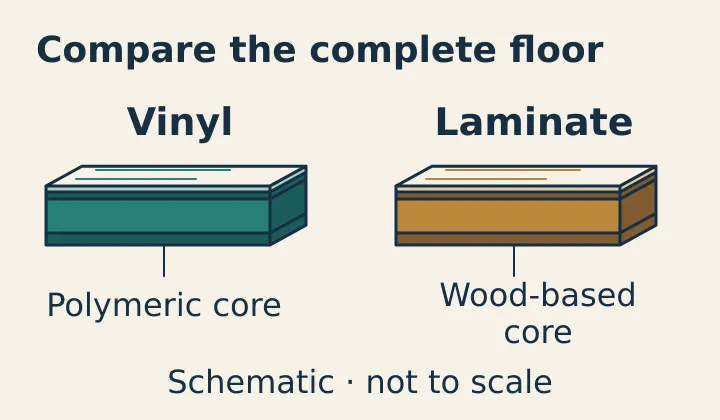
Comparisons
Vinyl vs Laminate: Water and Wear
Compare vinyl and laminate flooring by core, current standards, product-specific water warranties, wear evidence, subfloor preparation and care.
Comparison
Compare building materials side by side by weight, standards, exposure limits, installation demands, maintenance needs and fit for real projects.
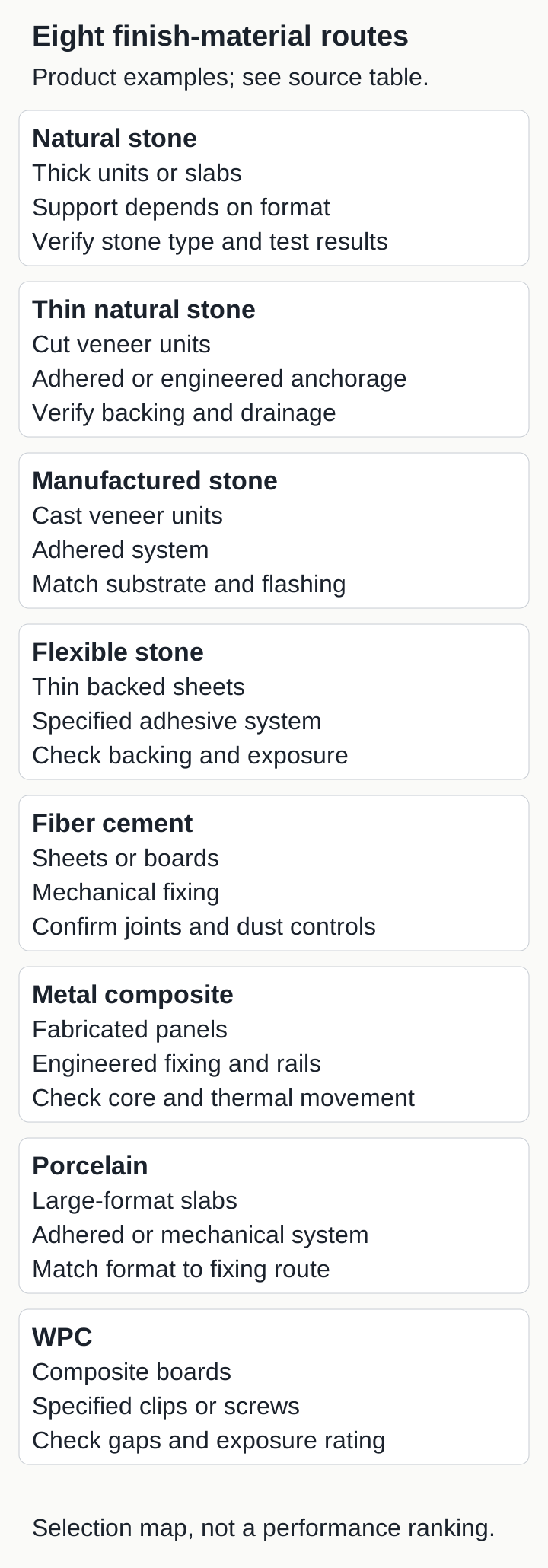
Compare each material in the format and wall system you would actually buy. The matrix below uses the same three questions: what is supplied, how is it supported, and which evidence should be checked? It is an editorial selection framework, not a ranking of fire safety, durability or price.
These are wall and facade finish materials, not structural materials. If you have not yet narrowed the options from your project conditions, start with how to choose building materials or the exterior wall material guide, then come back to compare the shortlist.
The examples establish formats and installation routes. No category-wide performance number is inferred from one product. Each row links its source directly; the material guide supplies the longer discussion.
Scroll horizontally to view all columns.
| Material | Supplied format | Support and fixing | Evidence to compare |
|---|---|---|---|
| Natural stone | Thick units or slabs; Buechel Aged Parchment full veneer is 3–5 in thick. | Support and anchorage are designed for the selected format and load. | Buechel's 2026 product sheet identifies limestone, thickness and stone test results; it is not a fixing design. |
| Thin natural stone | The same Buechel product's thin veneer is 1–1½ in thick. | Confirm the selected adhered or anchored system, backing and drainage. | Named-product thickness is an example, not an adhered-veneer code limit. |
| Manufactured stone | Cast veneer units; Coronado Amalfi Ledge is 1–1½ in thick. | Adhered veneer with the manufacturer's substrate, lath or masonry preparation and flashing details. | Profile table and 2023 installation guide: check the actual wall build-up. |
| Flexible stone | Thin stone face with a backing; Slate-Lite examples are about 1.5–2.5 mm overall. | The specified adhesive and substrate form part of the system. | Slate-Lite January 2024 sheet: exposure suitability varies by decor and backing; limestone and self-adhesive exceptions matter. |
| Fiber cement | Sheets and boards; the UK 2018 HardiePanel example is 8 mm thick. | Mechanical fixing to the specified supports, with defined joints. | James Hardie UK brochure: use the current regional installation instructions and cutting controls. |
| Metal composite | Composite panels, often fabricated into cassettes. | Designed mechanical fixing and support; allow thermal movement. | ALPOLIC conceptual installation methods: select the actual core, finish and project-approved wall assembly. |
| Porcelain | Large-format slabs. | Adhered and ventilated mechanical routes have different backing, joint and fixing details. | Laminam April 2021 facade guide, sections 6 and 9: match the product and format to the route. |
| WPC | Composite boards; Silvadec Atmosphere 175 is a co-extruded open-joint board. | Specified clips and screws to cleats, with movement gaps. | Silvadec FT0047: check the named product's exposure, fire and installation conditions. |
For interior floors, compare vinyl and laminate by moisture, wear and installation, with dated warranty examples and product-specific limits.
This site does not publish prices, and a per-square-foot material price alone does not describe the installed wall. Two quotes are only comparable when they price the same layers of the wall. Ask each supplier or installer to itemise these layers separately:
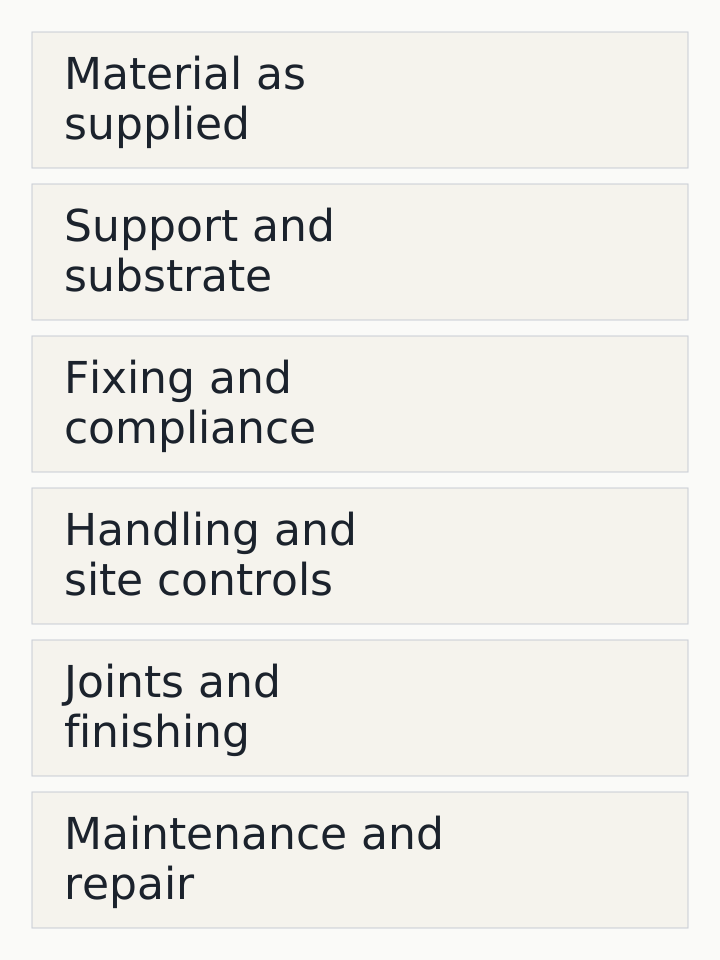
If one quote omits a layer that another includes, the cheaper number may simply be pricing less wall. Ask both to state the same scope, the same fixing system and the same code edition, then compare the totals.
Compare vinyl and laminate flooring by core, current standards, product-specific water warranties, wear evidence, subfloor preparation and care.
Fiber cement and metal cladding compared on standards, fire compliance, site handling, thermal movement and the maintenance cycle each one commits you to.
Flexible stone veneer and natural stone veneer compared on weight, standards, exposure limits and where each option is the only workable choice.
Large-format porcelain slabs and natural stone veneer compared on absorption, format, fixing method, damage behaviour and what each costs beyond the material.
Natural stone veneer and cultured stone compared on standards coverage, appearance, weight, damage behaviour and the conditions that favour each.