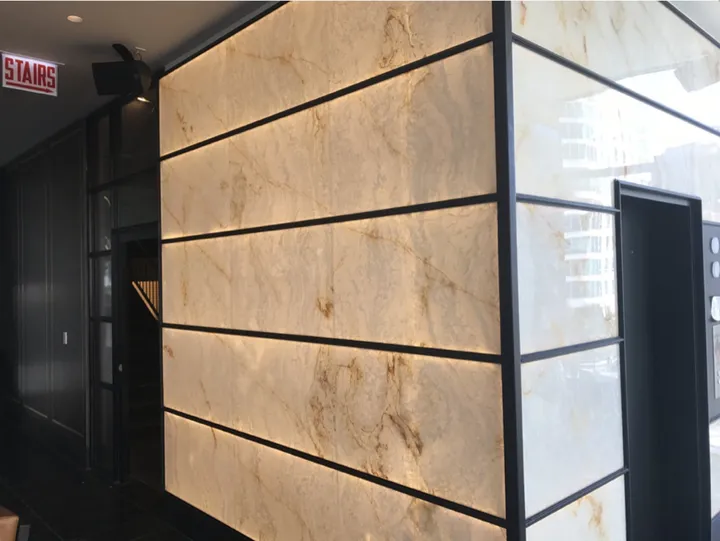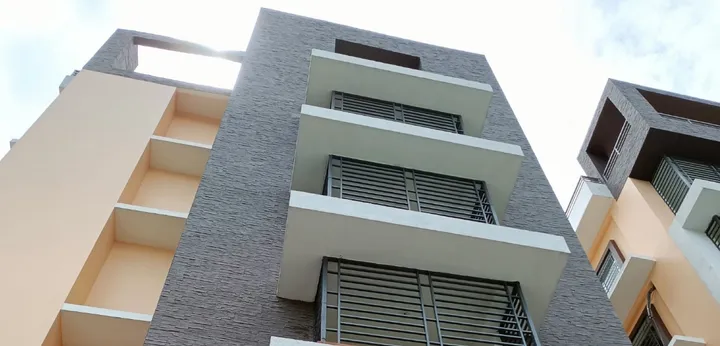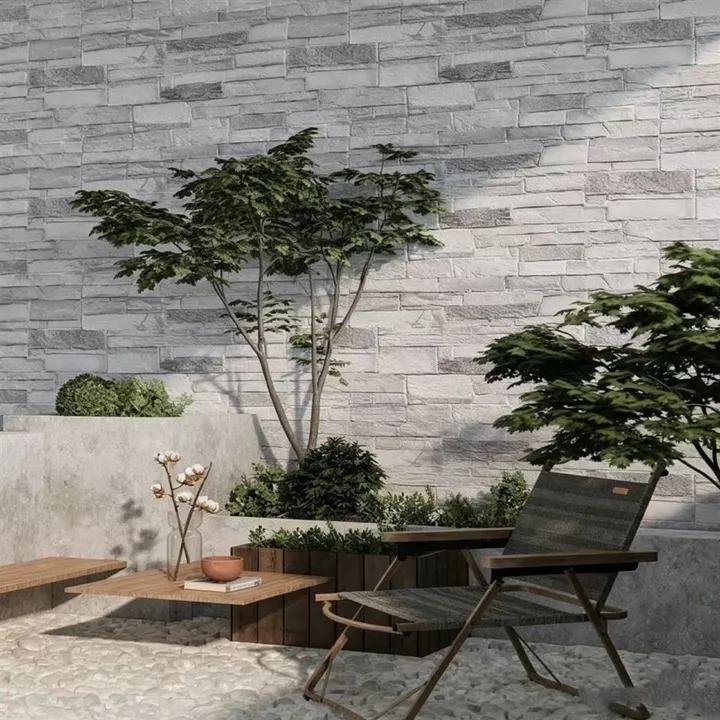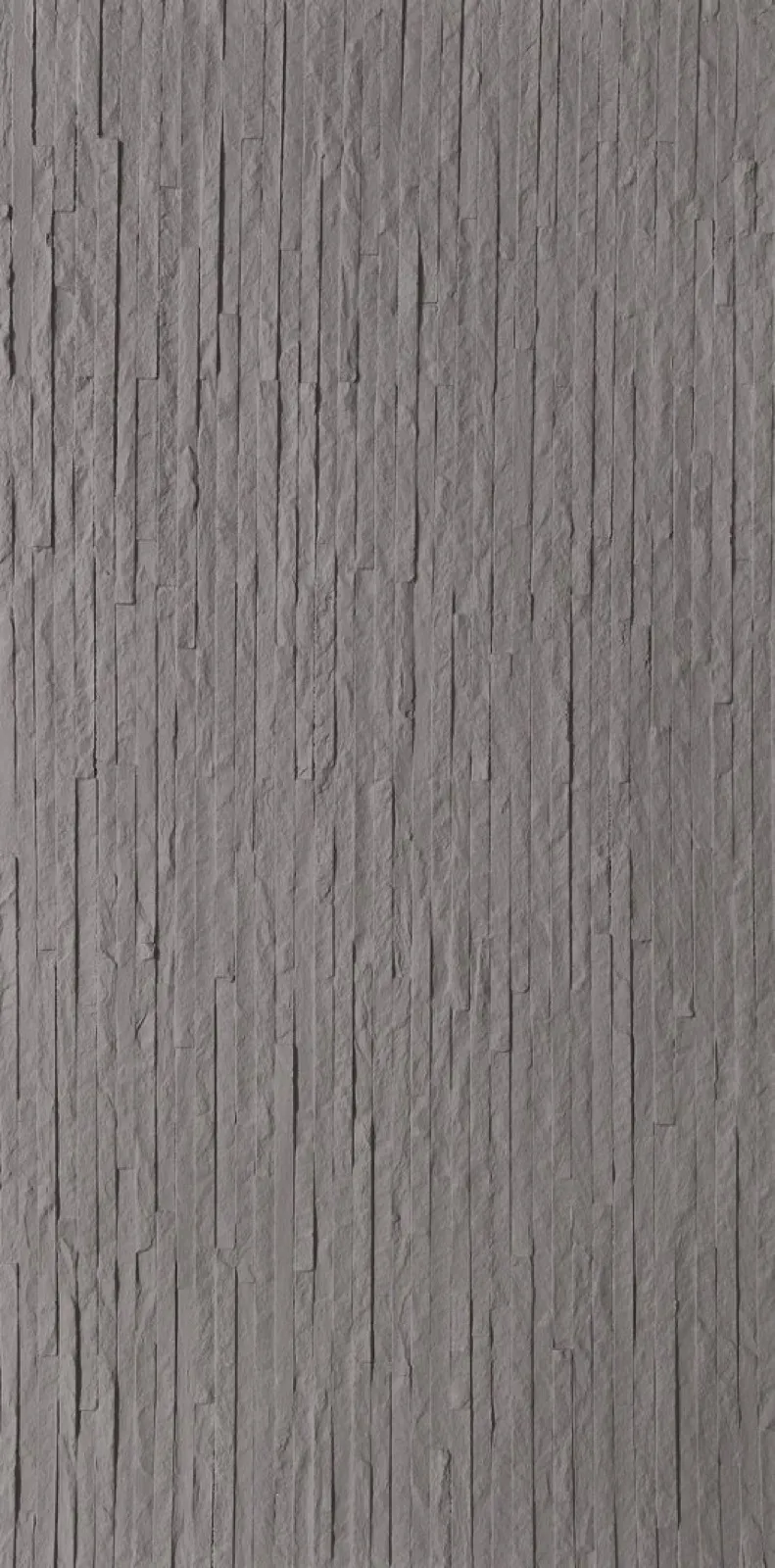
Key takeaways
- The material is the same stone as full-bed; the difference is thickness and therefore support.
- Getting under the code's adhered weight limit is the entire point of sawing it thin.
- Corner units cost more per unit and are ordered by length, not area.
- Thin does not mean less water management — the drainage behind it matters as much as ever.
What it is
Thin stone veneer is natural stone sawn to a reduced thickness for one specific reason: to bring the finished weight under the limit that lets it be adhered rather than anchored. The geology has not changed. A thin limestone absorbs water the way its parent block does.
Why the thickness matters
A full-bed stone wall needs somewhere to sit. That means a foundation extension or a supporting ledge, plus ties back to the structure — decisions taken at the structural design stage, which is why full-bed is rarely available as a retrofit option.
Sawing the stone thin removes that requirement, provided the assembly falls under the code’s adhered limit: 15 psf under the 2021 IBC, 30 psf under the 2024 IBC. Two rules still force anchored installation regardless of weight — units thicker than 5/8 in over exit ways, and any veneer more than 20 ft above adjacent grade.
The full set of adhered-versus-anchored rules is covered in the conventional veneer guide.
Common formats
Flats and corner returns, as with any veneer. Corners are the item that surprises people on cost: they are made specially so the finished corner does not show the thin edge, they are priced higher per unit, and they are quantified in linear measurement rather than area.
Some suppliers also offer panelised units, where several pieces are pre-assembled on a backing to speed installation. These change the installation method and sometimes the weight, so they should be specified as the product they are rather than as loose stone.
Where the saving stops being a saving
Thin stone removes the ledge. It does not remove anything else:
- The drainage plane behind the veneer is exactly as important. Water that gets behind thin stone has the same nowhere to go as water behind thick stone.
- Substrate quality matters more, not less, because bond is now doing the work that a ledge used to do.
- Absorption is inherited from the parent stone, so freeze-thaw exposure has to be assessed the same way.
Advantages
It is real stone at a weight that renovation can accept, which is the combination that no other option in this family offers. Over an existing structure it is frequently the only way to get genuine stone onto a wall at all.
Limitations
Bond becomes critical, so substrate preparation is not negotiable. Corner cost is higher than the field area suggests. And because the stone is thin, edge exposure at openings and terminations needs detailing that hides the thickness — otherwise the facing reads as a veneer rather than as masonry.
Installation overview
Substrate preparation and water management, lath, scratch coat, setting bed, units, pointing. The same sequence as any adhered veneer, with more attention to bond because there is no mechanical support behind it.
Maintenance
Cleaning, plus periodic inspection of terminations and flashing. Where a unit debonds, the cause is usually substrate or workmanship at installation rather than deterioration of the stone.
Selection checklist
- Does the assembly weight fall under the adhered limit in the adopted code edition?
- Is the unit thickness below the 5/8 in threshold, and is the wall under 20 ft above grade?
- Is there a drainage plane and flashing behind the veneer?
- Have corner units been quantified in linear measurement?
- Has absorption been obtained for the specific stone, for the actual exposure?
Compare against the manufactured alternative in Stone Veneer vs Cultured Stone, against the lightest option in this family, Flexible Stone Veneer, or see how thin stone performs on exterior walls.
Key performance characteristics
| Property | Typical range | Basis |
|---|---|---|
| Governing weight limit | must fall under the adhered limit in the adopted code — 15 psf in the 2021 IBC, 30 psf in the 2024 IBC | Model code text; confirm the edition adopted locally |
| Unit thickness | sawn thinner than full-bed stone; the exact figure varies by supplier and stone Thickness above 5/8 in brings the exit-way and 20 ft height rules into play. | — |
| Water absorption | unchanged from the parent stone; obtain the figure for the named material | — |
| Freeze-thaw durability | depends on the parent stone and how long the assembly stays saturated | — |
| Bond strength required | minimum 50 psi on gross bonded area | IBC adhered masonry veneer provisions |
Ranges are indicative and vary by product formulation, grade and thickness. Confirm values against the current manufacturer documentation for the product actually being supplied, and verify the applicable local codes.
Frequently asked questions
Is thin stone veneer weaker than full-bed stone?
It is the same stone. What changes is that a thinner unit is carried by its bond to the substrate rather than bearing on a ledge, so the substrate and the adhesive become the critical elements.
Can thin stone veneer go over existing siding?
Not directly. It needs a substrate that can develop the required bond and a drainage plane behind it, which usually means removing the existing finish rather than covering it.
Sources
- IBC 1404.11 — Adhered masonry veneer (code text) — UpCodes Accessed August 28, 2026.
- TEK 03-06C — Concrete Masonry Veneers — Concrete Masonry & Hardscapes Association Accessed August 28, 2026.
- ASTM C1242-22 — Standard Guide for Selection, Design, and Installation of Dimension Stone Attachment Systems — ASTM International