Key takeaways
- ASTM D7032 covers deck boards, stair treads, guards and handrails — not wall cladding.
- Thermal movement is significant and drives the fixing and jointing detail.
- Moisture stability is better than timber, but it is not a substitute for a drainage plane.
- Interior and sheltered exterior use is where the material is on firmest ground.
What it is
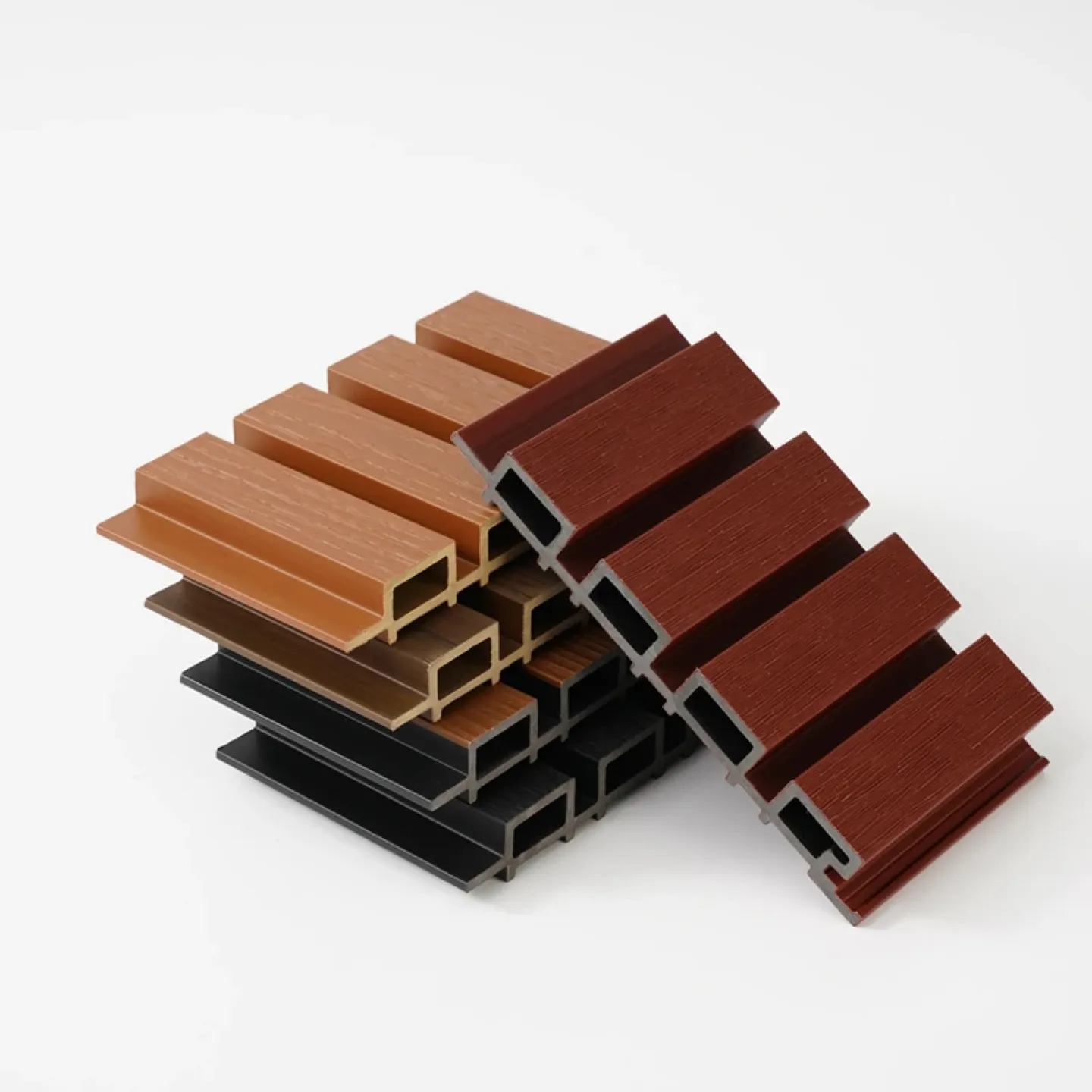
WPC — wood plastic composite — combines wood flour with a thermoplastic binder such as polyethylene, polypropylene or PVC, plus additives for colour, UV resistance and processing. The mix is extruded into panel and plank profiles, commonly with interlocking edges.
The intent is to keep the appearance of timber while removing timber’s rot and dimensional-movement behaviour. It succeeds at the first two and introduces a different movement problem of its own.
The standards gap
ASTM D7032 is the specification most often quoted for wood-plastic composites. Its title is explicit about its scope: performance ratings for deck boards, stair treads, guards and handrails. Its purpose is to establish a basis for code recognition of those products in exterior applications.
It is not a cladding standard. A WPC wall panel referencing D7032 is referencing a document written for a different application — which does not make the product unsuitable, but does mean the performance claims for wall use have to be evidenced separately.
The same situation applies to flexible stone, where no dedicated consensus standard was identified either. In both cases the specification question changes from “which standard?” to “which product, and what test evidence exists for it?”.
Thermal movement is the design constraint
This is the property that causes most of the visible problems. Thermoplastic-bound composites expand and contract more than the materials they are usually compared against, and panel length multiplies the effect.
The consequences appear as buckling, opened joints, or fasteners pulling. All three are design failures rather than material failures: the manufacturer’s movement allowance per panel length has to be built into the fixing pattern, the joint width and the termination detail.
Common formats
Interlocking panels, planks and slatted profiles, with matching trims. Slatted profiles are popular for feature walls and change the ventilation behaviour of the assembly, since the cavity behind is partly open.
Advantages
Dimensional stability against moisture is better than timber, and the material does not rot or feed insects. Panels are light and quick to install, and interlocking profiles reduce the number of visible fixings. For interior feature walls and sheltered exterior positions, that combination is hard to match at the price.
Limitations
Thermal movement, as above. UV and colour behaviour vary by formulation and are a manufacturer question rather than a category property. The material is combustible in a way that Fiber Cement Cladding and Metal Wall Panels are not, so fire requirements for the location need checking against the tested assembly before it is considered for exterior use at height. Where WPC is being weighed against those two on an exterior wall, the trade-offs are set out in Fiber Cement vs Metal Cladding.
Installation overview
Battened framing with a ventilated cavity, a drainage plane behind, then panels fixed to the manufacturer’s pattern with the specified movement gaps at ends and at terminations. Cutting is straightforward with woodworking tools. The details that matter are the ones that let the panel move.
Maintenance
Washing. Colour change over time is normal for the material class; the rate is a formulation question. Joints and terminations get inspected for movement-related opening.
Selection checklist
- What has this specific wall product been tested to, given that D7032 covers decking?
- What is the manufacturer’s thermal movement allowance per panel length, and is it in the fixing detail?
- Is there a ventilated cavity and a drainage plane behind the panels?
- For exterior use, do the fire requirements for the location permit this material in a tested assembly?
- Has fade and UV data been obtained for the specific formulation?
See the wall cladding family and our guide to materials for exterior walls for how it sits against the alternatives.
Key performance characteristics
| Property | Typical range | Basis |
|---|---|---|
| Commonly cited standard | ASTM D7032 establishes performance ratings for WPC deck boards, stair treads, guards and handrails — not cladding Ask the manufacturer what their wall product has actually been tested to. | ASTM D7032 scope |
| Composition | wood flour with a thermoplastic such as PE, PP or PVC, plus additives; ratios vary by manufacturer | — |
| Thermal movement | significant for a cladding material; confirm the manufacturer's allowance per panel length This is the property that most often causes visible problems when it is not designed for. | — |
| UV and colour stability | varies by formulation and pigment system; obtain the manufacturer's fade data | — |
| Moisture behaviour | more stable than timber but not waterproof; confirm suitability for the exposure | — |
Ranges are indicative and vary by product formulation, grade and thickness. Confirm values against the current manufacturer documentation for the product actually being supplied, and verify the applicable local codes.
Frequently asked questions
Which standard covers WPC wall panels?
ASTM D7032 is the specification usually cited for wood-plastic composites, but its scope is deck boards, stair treads, guards and handrails. It does not establish ratings for wall cladding, so ask the manufacturer which tests their wall product has been through.
Can WPC panels be used outside?
Some products are made for exterior use, but the detail matters more than the product. Thermal movement has to be allowed for in the fixing and jointing, and the wall behind still needs a ventilated cavity and a drainage plane.
Sources
- ASTM D7032 — Standard Specification for Establishing Performance Ratings for Wood-Plastic Composite and Plastic Lumber Deck Boards, Stair Treads, Guards, and Handrails — ASTM International Accessed August 28, 2026.
- ICC-ES AC174 — Acceptance Criteria for Deck Board Span Ratings and Guards or Handrails — ICC Evaluation Service Accessed August 28, 2026.
- ASTM D7032-17 as referenced in the model codes — International Code Council Accessed August 28, 2026.