Key takeaways
- Veneer is a finish; the wall behind it carries load and manages water.
- Weight per square foot decides adhered versus anchored, and the code limit has changed recently.
- Absorption governs freeze-thaw risk, which is a property of the specific stone, not of the category.
- Most veneer failures are drainage failures that appear on the stone rather than faults in it.
What it is
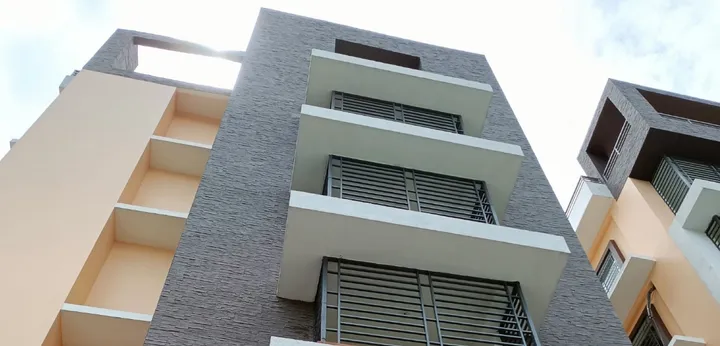
Natural stone veneer is quarried stone cut into facing units and fixed to a wall that is already doing the structural work. The stone provides appearance and surface durability. Carrying load, resisting wind and keeping water out of the building all belong to the assembly behind it.
That division explains most of what goes wrong. Veneer problems are usually not failures of the stone — they are failures of the water-resistive barrier, the drainage plane or the flashing behind it, which then surface as staining, efflorescence or spalling on the visible face.
Adhered or anchored: the decision the code makes for you
Two systems exist, and weight decides between them.
Adhered veneer is carried by its bond to the substrate. The IBC caps adhered masonry veneer at 15 psf, and the California Building Code carries the same figure; the 2024 IBC raised that limit to 30 psf. Interior adhered masonry veneer is limited separately, at 20 psf. Because jurisdictions adopt editions on their own schedule, the applicable number is the one in the code actually adopted for the project — not the newest one published.
Anchored veneer is supported on a ledge and tied back. Two rules force it regardless of weight: units thicker than 5/8 in used over exit ways, and units more than 20 ft above adjacent grade.
The code also sets a minimum bond strength of 50 psi on gross bonded area, with shear testing required per area of wall. That requirement is the reason substrate preparation is not a detail that can be improvised on site.
Where the stone is sawn specifically to get under the adhered limit, see Thin Stone Veneer.
Common formats
Units are supplied as flats and as corner returns. Corners are a distinct product — shaped so the finished corner does not reveal the thinness of the facing — and they are ordered by linear measurement rather than by area. Underestimating corner quantity is among the more common ordering errors on veneer work.
What governs performance
Water absorption governs freeze-thaw behaviour. A porous sandstone and a dense granite are not interchangeable in a climate that cycles below freezing while the wall is wet. The question is not whether a stone is “durable” in the abstract but whether it stays saturated long enough to be damaged when it freezes.
Soluble salts, in the stone or in the setting materials, produce efflorescence when water moves through the assembly and evaporates at the face. It is a symptom of water going where it should not, which is why it appears alongside detailing problems rather than on its own.
Weight per unit area is the first number to obtain, for the reason set out above.
Substrates and support
Adhered veneer needs a substrate that is dimensionally stable, capable of developing the required bond, and detailed so that water reaching the back of the stone can drain and dry. Over framing that means a water-resistive barrier, a drainage provision, lath and a scratch coat, or a proprietary equivalent that the manufacturer has tested as a complete system.
Gypsum board is not a veneer substrate in wet or exterior locations, and no surface with unresolved movement is one either — the veneer will telegraph it.
Advantages
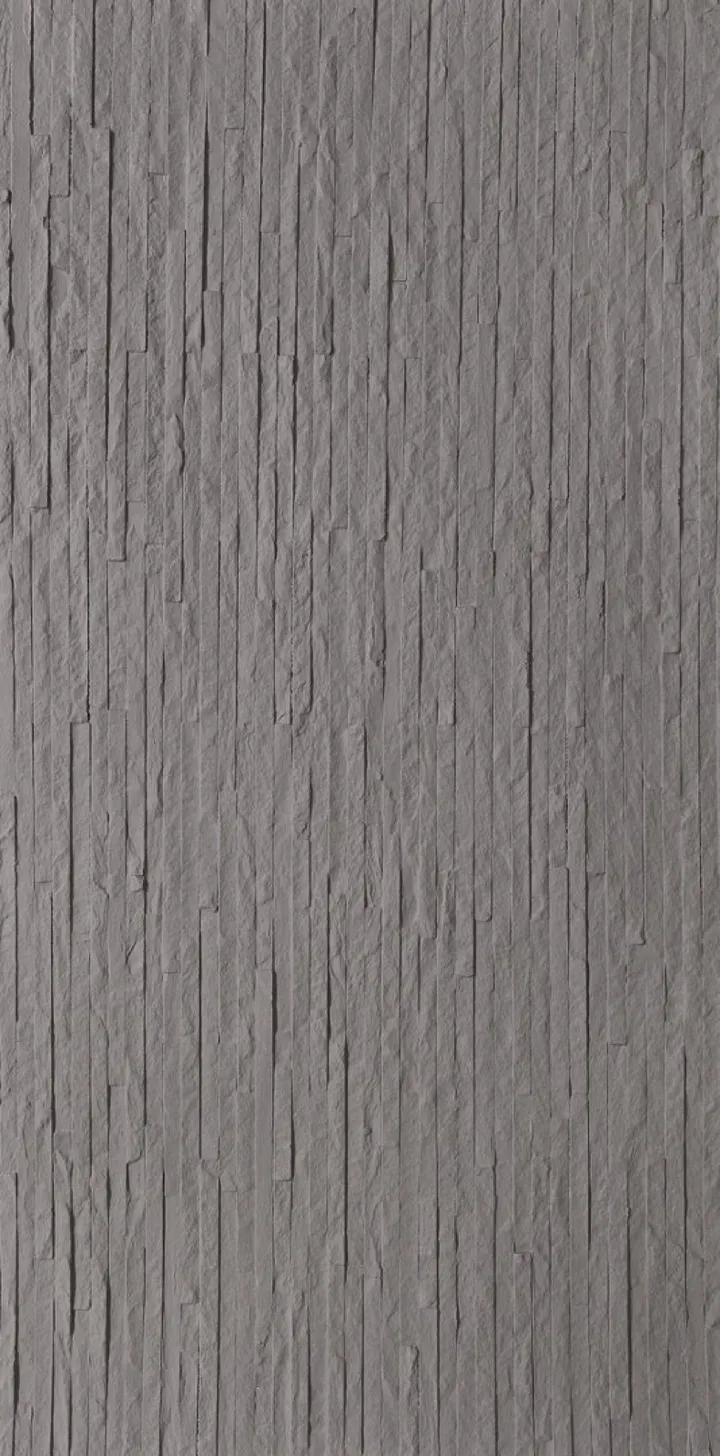
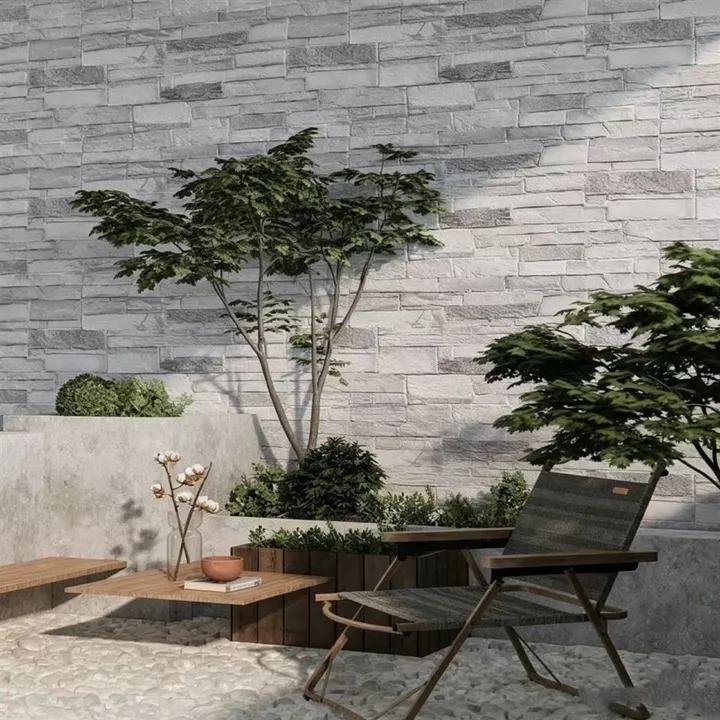
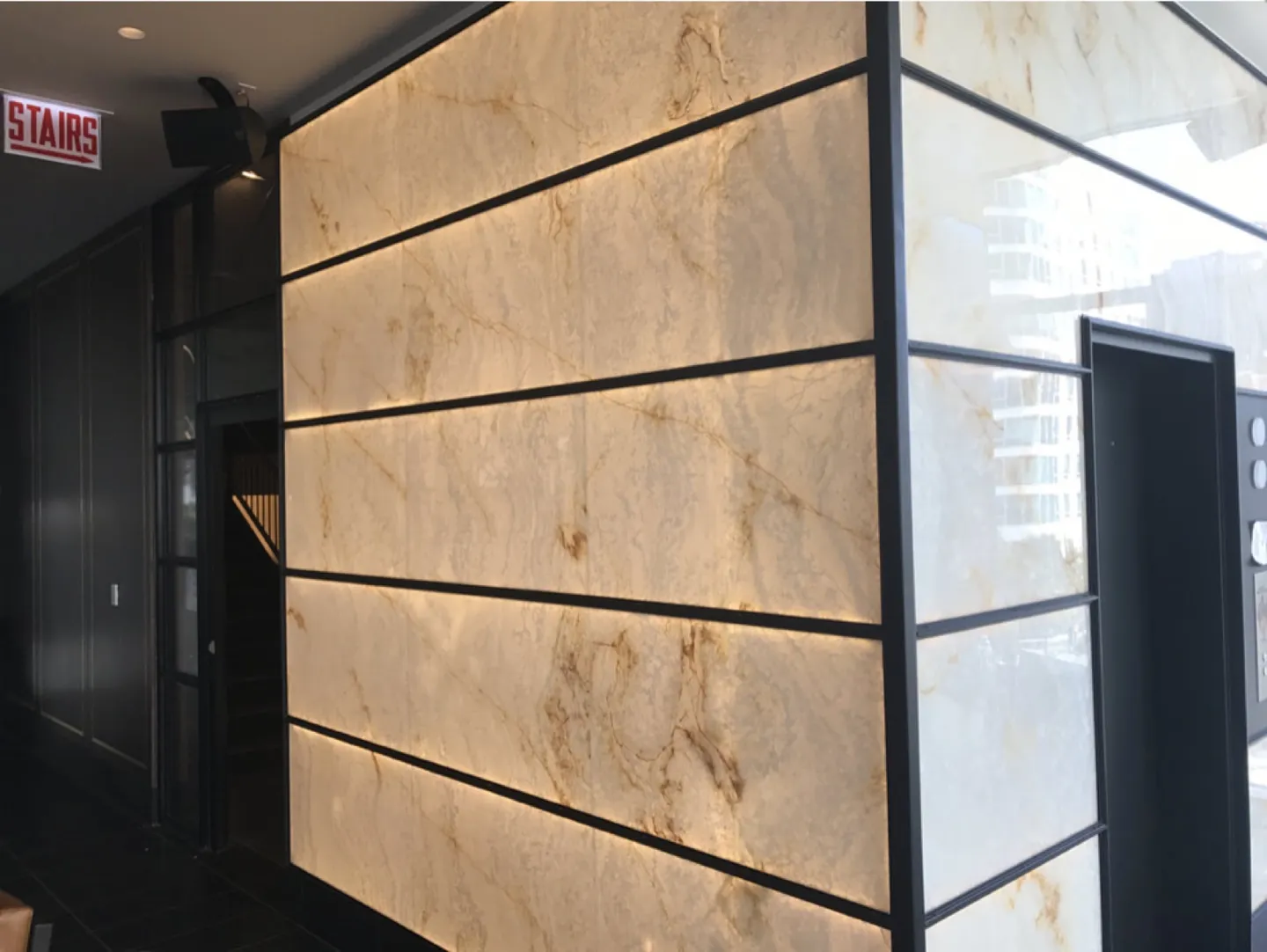
The material is genuine, so the surface ages as stone ages rather than as a coating does. Variation between units reads as natural rather than as a repeating pattern, which is the main visual difference from moulded alternatives. That comparison is set out in Stone Veneer vs Cultured Stone.
Limitations
Weight constrains where it can go, particularly over an existing structure in renovation. Cost follows quarrying and cutting rather than production volume. And because the properties that matter vary by stone, a specification naming only “natural stone veneer” has not specified anything that can be checked.
Installation overview
For adhered veneer the sequence runs: substrate preparation and water management, lath, scratch coat, setting bed, units, then pointing where the design calls for it. The details that decide whether the wall performs — flashing, weep provision, clearances at grade and at openings — are fixed before any stone is set.
Maintenance
Cleaning is normally the only routine requirement. Where staining or efflorescence appears, finding the water source matters more than removing the deposit, which will otherwise return.
Selection checklist
- Has the specific stone been named, with weight and absorption obtained from the supplier?
- Which code edition is adopted, and does the veneer weight fall under its adhered limit?
- Do the height or exit-way rules force anchored installation regardless of weight?
- Is the water-resistive barrier, drainage and flashing detailed behind the veneer?
- Have corner units been counted separately from field area?
For where stone sits among wall finishes generally, see Wall Cladding Materials, Best Materials for Exterior Walls, and Exterior Building Materials.
Key performance characteristics
| Property | Typical range | Basis |
|---|---|---|
| Adhered veneer weight limit | 15 psf under the 2021 IBC and the California Building Code; raised to 30 psf in the 2024 IBC Interior adhered masonry veneer is limited separately, at 20 psf in the IBC. | Model code text; confirm the edition adopted in the project jurisdiction |
| Bond (shear) strength to backing | minimum 50 psi on gross bonded area, with testing required per area of wall | IBC adhered masonry veneer provisions |
| Anchored-veneer trigger | units over 5/8 in above exit ways, or any veneer more than 20 ft above grade, must be anchored | IBC adhered masonry veneer provisions |
| Water absorption | varies widely between granite, limestone, sandstone and slate; obtain for the named stone Absorption, not hardness, is what predicts freeze-thaw behaviour in a saturated wall. | — |
| Fire behaviour | stone is non-combustible, but classification applies to the tested assembly rather than the facing | — |
Ranges are indicative and vary by product formulation, grade and thickness. Confirm values against the current manufacturer documentation for the product actually being supplied, and verify the applicable local codes.
Compared with alternatives
- Flexible Stone vs Natural Stone Flexible stone veneer and natural stone veneer compared on weight, standards, exposure limits and where each option is the only workable choice.
- Porcelain Slab vs Natural Stone Large-format porcelain slabs and natural stone veneer compared on absorption, format, fixing method, damage behaviour and what each costs beyond the material.
- Stone Veneer vs Cultured Stone Natural stone veneer and cultured stone compared on standards coverage, appearance, weight, damage behaviour and the conditions that favour each.
Frequently asked questions
Does natural stone veneer make a wall stronger?
No. Veneer is a facing carried by the wall behind it. Structural capacity and water management both belong to the backup assembly, not to the stone.
What decides whether stone can be adhered rather than anchored?
Weight per square foot measured against the limit in the adopted code edition, plus the height and location rules that force anchored installation regardless of weight.
Sources
- IBC 1404.11 — Adhered masonry veneer (code text) — UpCodes Accessed August 28, 2026.
- TEK 03-06C — Concrete Masonry Veneers — Concrete Masonry & Hardscapes Association Accessed August 28, 2026.
- ASTM C1242-22 — Standard Guide for Selection, Design, and Installation of Dimension Stone Attachment Systems — ASTM International