stone masonry
Cultured Stone
Cultured stone, or manufactured stone veneer, explained through ASTM C1670 and C1780, including the water-management failures that dominate its record.
Material family
Natural stone veneer, thin stone, cultured stone and flexible stone systems used as masonry-look wall finishes, with format and substrate limits.
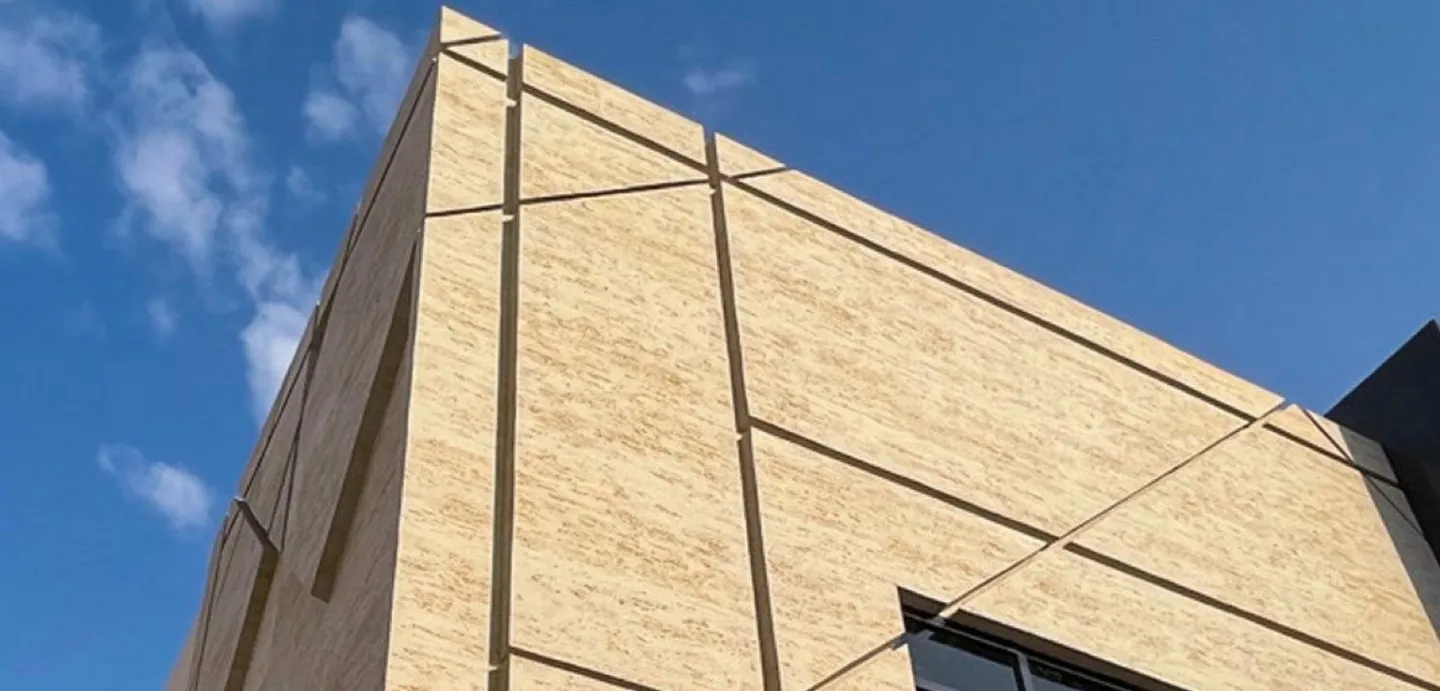
This family covers stone and masonry-look wall finishes: natural veneer, thin stone, cultured stone, and flexible stone systems. Pages in this group separate format and thickness from the rock they are meant to resemble, because a flexible stone sheet on a polymer backing and a sawn natural veneer unit do not install, weigh, or weather the same way.
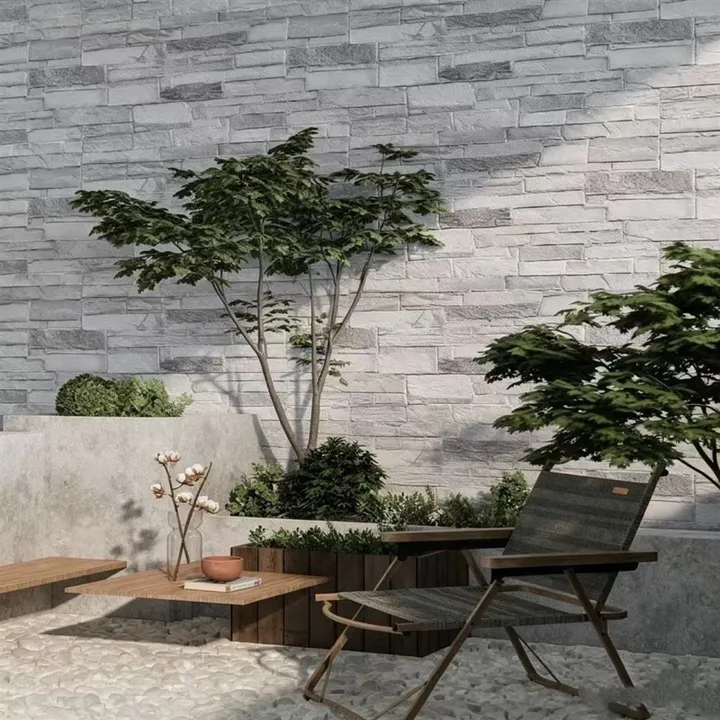
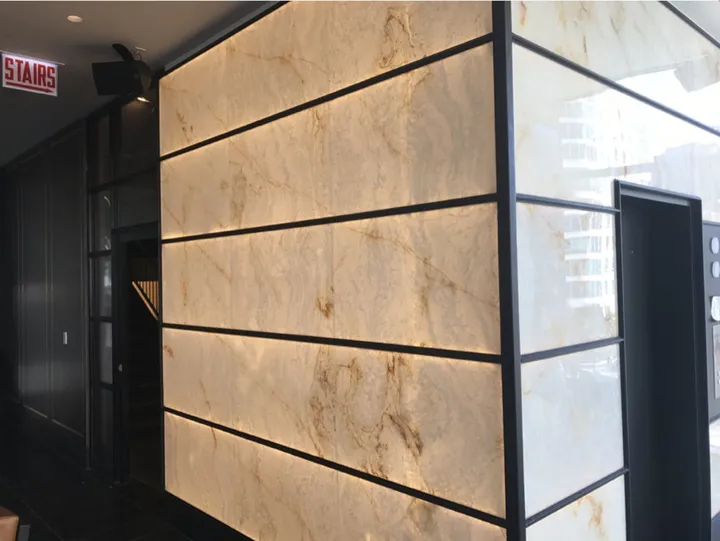
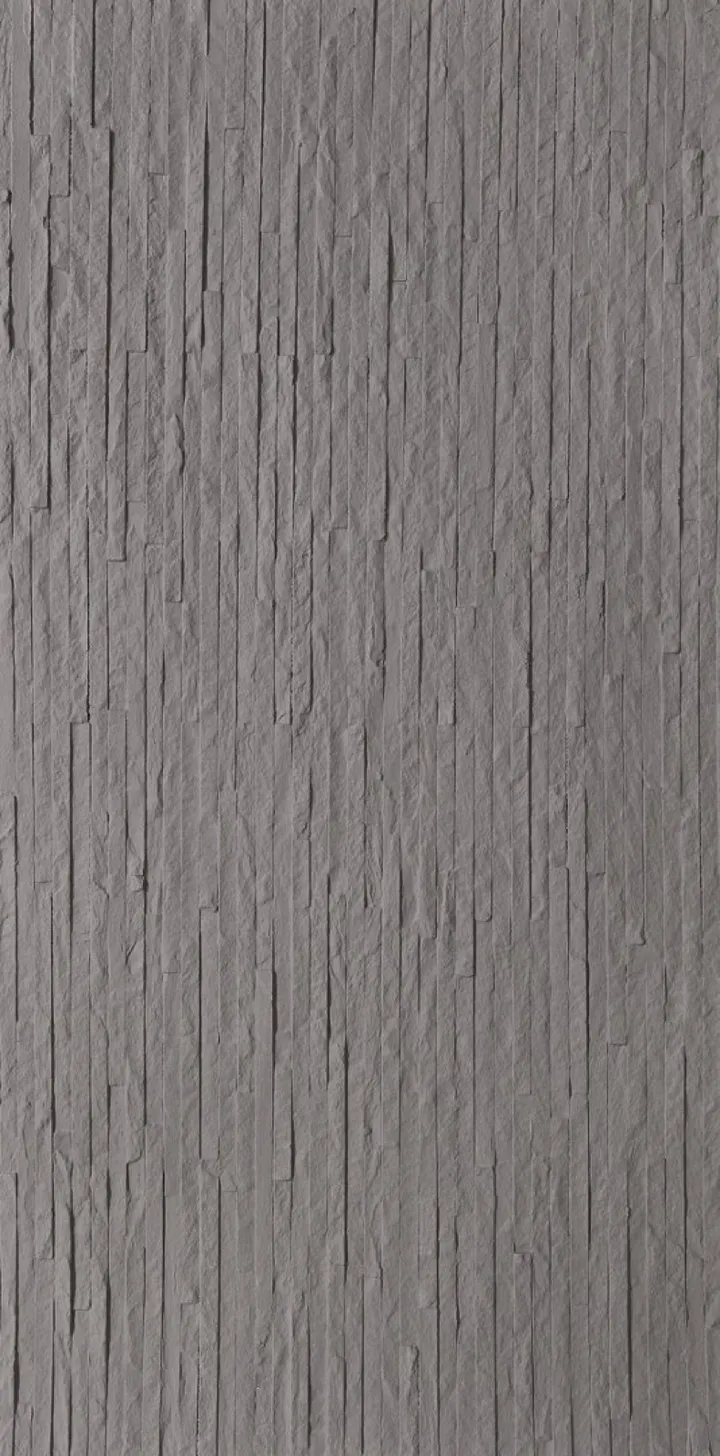
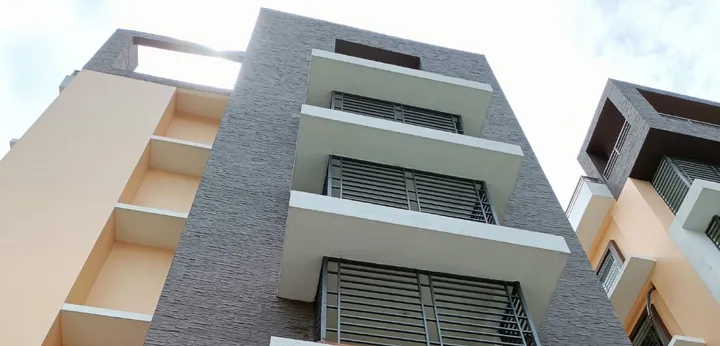
Use the material pages to check suitable substrates, exposure limits, and what the cited standard or datasheet actually supports. A project photograph here is illustration, not evidence that a named product was used.
On an exterior wall, the first question about stone cladding is not which rock, but which format — because format decides how the stone is held, which document governs it, and what the wall behind it has to do.
Scroll horizontally to view all columns.
| Format | What it is | How it is held | Exterior limit to check first | Guide |
|---|---|---|---|---|
| Natural stone veneer | Quarried stone cut into facing units | Adhered while under the code weight limit; anchored on a supporting ledge above it | Weight per unit area of the named stone against the adopted IBC edition | Natural veneer guide |
| Thin stone veneer | The same natural stone sawn thinner | Adhered — staying under the limit is the reason it is sawn thin | Weight against the adopted limit; check the adopted code and local amendments for any anchoring trigger by thickness or height | Thin stone guide |
| Cultured (manufactured) stone | Cement-based units cast to resemble stone | Adhered only | ASTM C1670 unit limits and ASTM C1780 installation | Manufactured stone guide |
| Flexible stone veneer | A thin stone layer on a polymer or fibreglass backing | Adhered with the manufacturer’s adhesive | No consensus standard; exterior suitability is product by product | Flexible stone guide |
CMHA’s account of the masonry-code change identifies the increase in the prescriptive adhered-veneer weight limit from 15 to 30 psf in TMS 402-22, referenced by the 2024 IBC. This is a change in a referenced masonry standard, not a universal 30 psf allowance in every jurisdiction. Local amendments and the specified system can add other requirements; a weight value alone is not permission to adhere a product at any height or over any substrate. Confirm which edition and local amendments the project jurisdiction has adopted before a format is chosen, because they can change the answer.
Scroll horizontally to view all columns.
| Format and named example | Published facing thickness | Fixing route to verify |
|---|---|---|
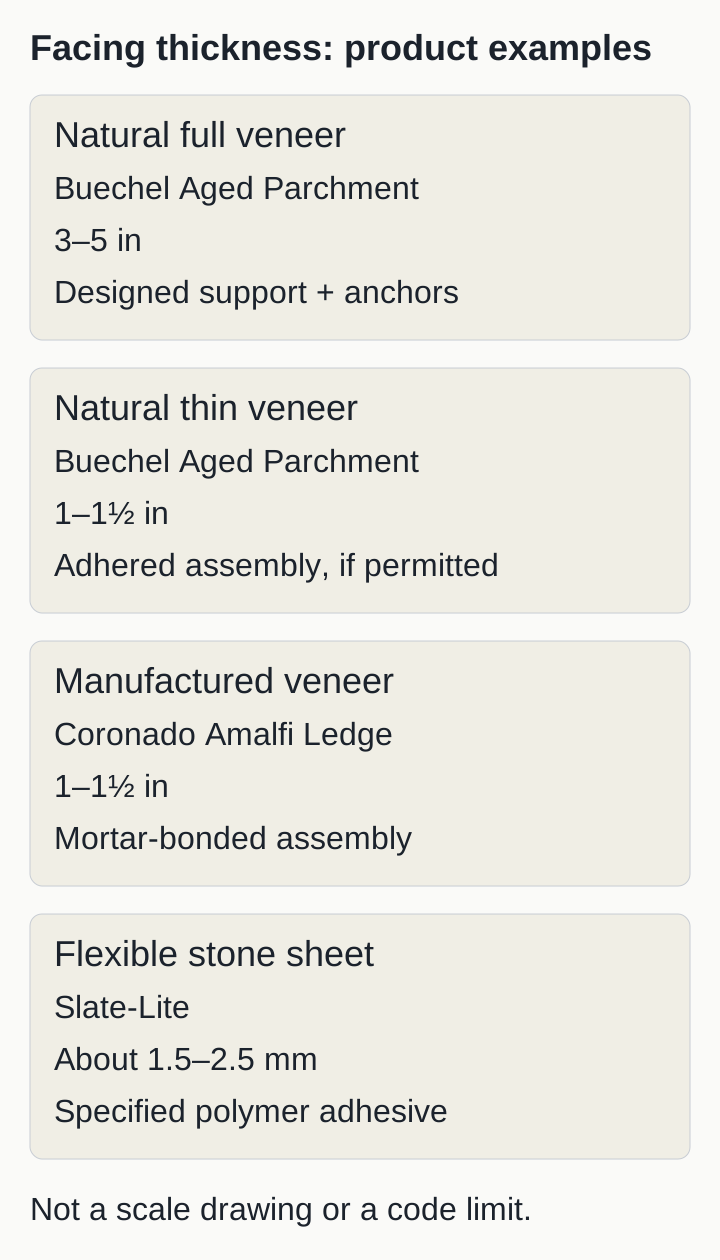
| Buechel Aged Parchment Tailored Blend, full veneer | 3–5 in | Designed bearing support and ties/anchors; confirm the full-veneer detail with the engineer. |
| Same Buechel stone, thin veneer | 1–1½ in | An adhered assembly where the product, substrate and governing limits permit it; thin does not mean weight-free. |
| Coronado Amalfi Ledge, manufactured veneer | 1–1½ in | Mortar-bonded veneer following the manufacturer’s substrate preparation and installation instructions. |
| Slate-Lite flexible stone sheet | Approximately 1.5–2.5 mm total | Manufacturer-specified polymer adhesive and prepared substrate; verify the decor and exposure. |
Thickness sources: Buechel’s Aged Parchment product sheet, Coronado’s profile specifications, and Slate-Lite’s January 2024 datasheet. These examples illustrate why a quote must name the format. The Slate-Lite sheet specifically excludes its limestone decors from wet/outdoor use and restricts self-adhesive variants to dry interiors; a stone surface alone does not prove facade suitability.
The Coronado Standard Stone Installation Guide, pages 3–6, provides a concrete manufactured-veneer example, not one detail for every stone system:
For anchored natural stone or flexible sheets, obtain the relevant system’s moisture-management details separately. The visible stone, mortar or adhesive is not a substitute for the required wall drainage and opening flashings.
The terms overlap in everyday use, and suppliers use them interchangeably. Both describe stone used as a non-structural facing over a wall that carries the load and manages the water. The distinction that changes the specification is how the stone is held:
When a quote or drawing says “stone cladding”, ask which of the two it means. The answer changes the structural design, the substrate, and the price.
There is no stone type that is best for every exterior wall. Three checks narrow the choice for a given wall:
A stone that passes all three in one climate and on one substrate may fail one of them on the next project.
Pairwise questions — cost, weight, appearance, durability — are covered in Stone Veneer vs Cultured Stone and Flexible Stone vs Natural Stone. For stone alongside panel systems on the same wall, see Best Materials for Exterior Walls and Wall Cladding Materials.
Cultured stone, or manufactured stone veneer, explained through ASTM C1670 and C1780, including the water-management failures that dominate its record.
Flexible stone veneer explained, including the standards gap that makes every performance figure a product claim rather than a category property.
What natural stone veneer is, how the code's weight limits decide between adhered and anchored, and the substrate and drainage conditions it depends on.
Thin stone veneer explained — why the material is sawn thin, how that changes the support requirement, and where the saving in weight stops being a saving.