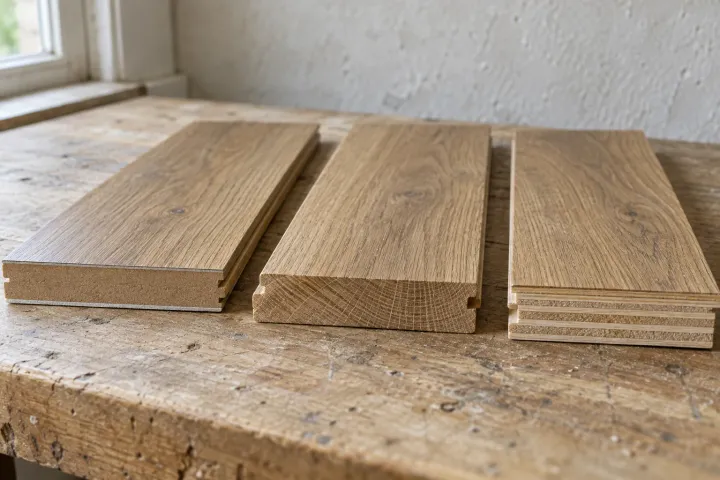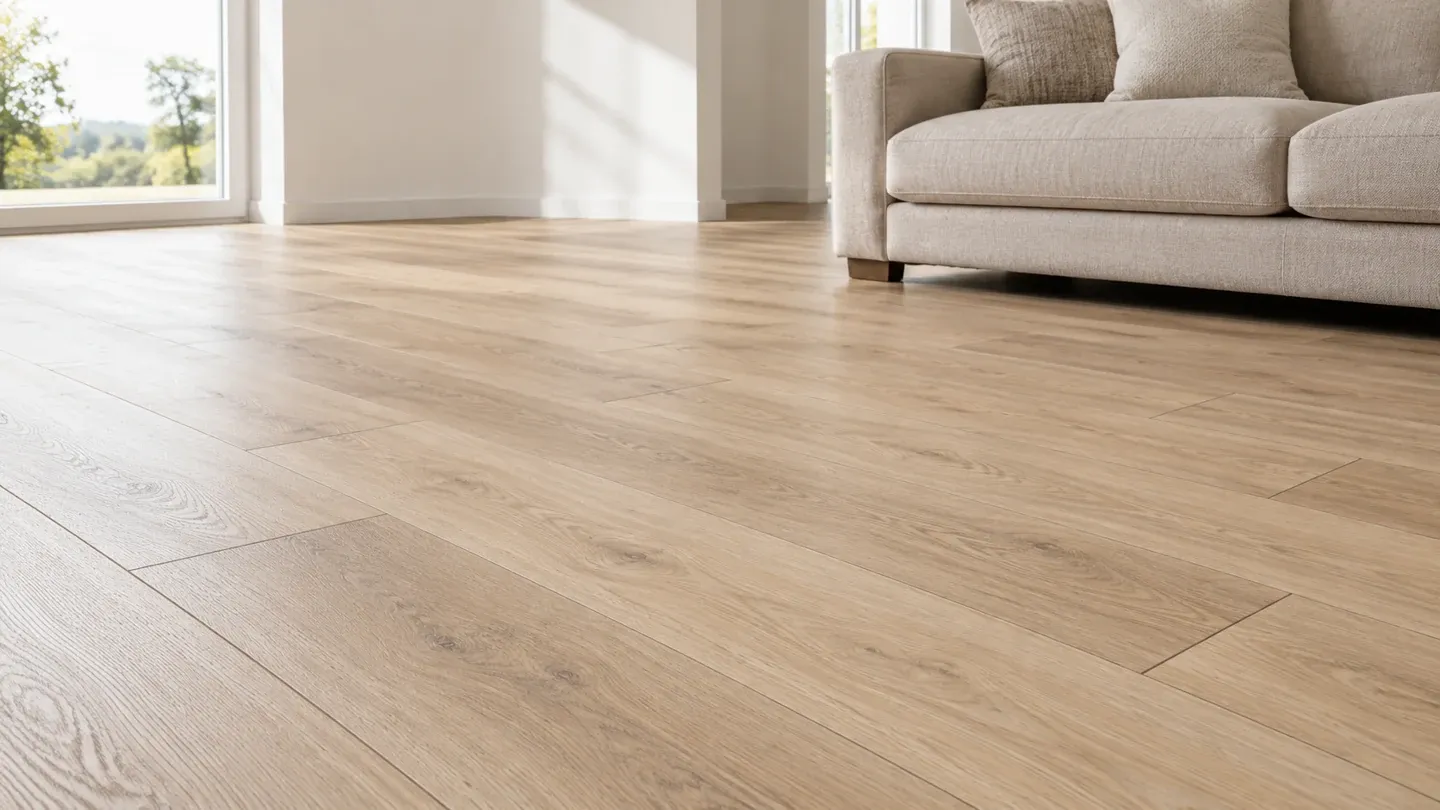
Laminate flooring is a rigid, layered floor covering with a decorative surface over a wood-based core. Its AC wear class measures surface abrasion resistance; suitability for a bathroom or another frequently wetted room comes from the exact product’s permitted uses and installation conditions.
Choose laminate by checking construction, wear and water exposure separately. A higher AC class addresses abrasive wear-through, while moisture performance depends on the core, joints and installed system. NALFA LF 01-2026 sets minimum abrasion requirements within broader certification levels; the product’s room permissions still need a separate check. Use the selection record below to keep those decisions together before choosing a color.
- Identify the format: rigid wood-based planks or tiles.
- Read the wear evidence: AC class, test method and standard edition.
- Match the room: permitted water exposure, perimeter details and care requirements.
- Compare the finish: a physical sample and its exact product/color code.
The materials directory connects this guide with other floor and building-material options.
What is laminate flooring made of?
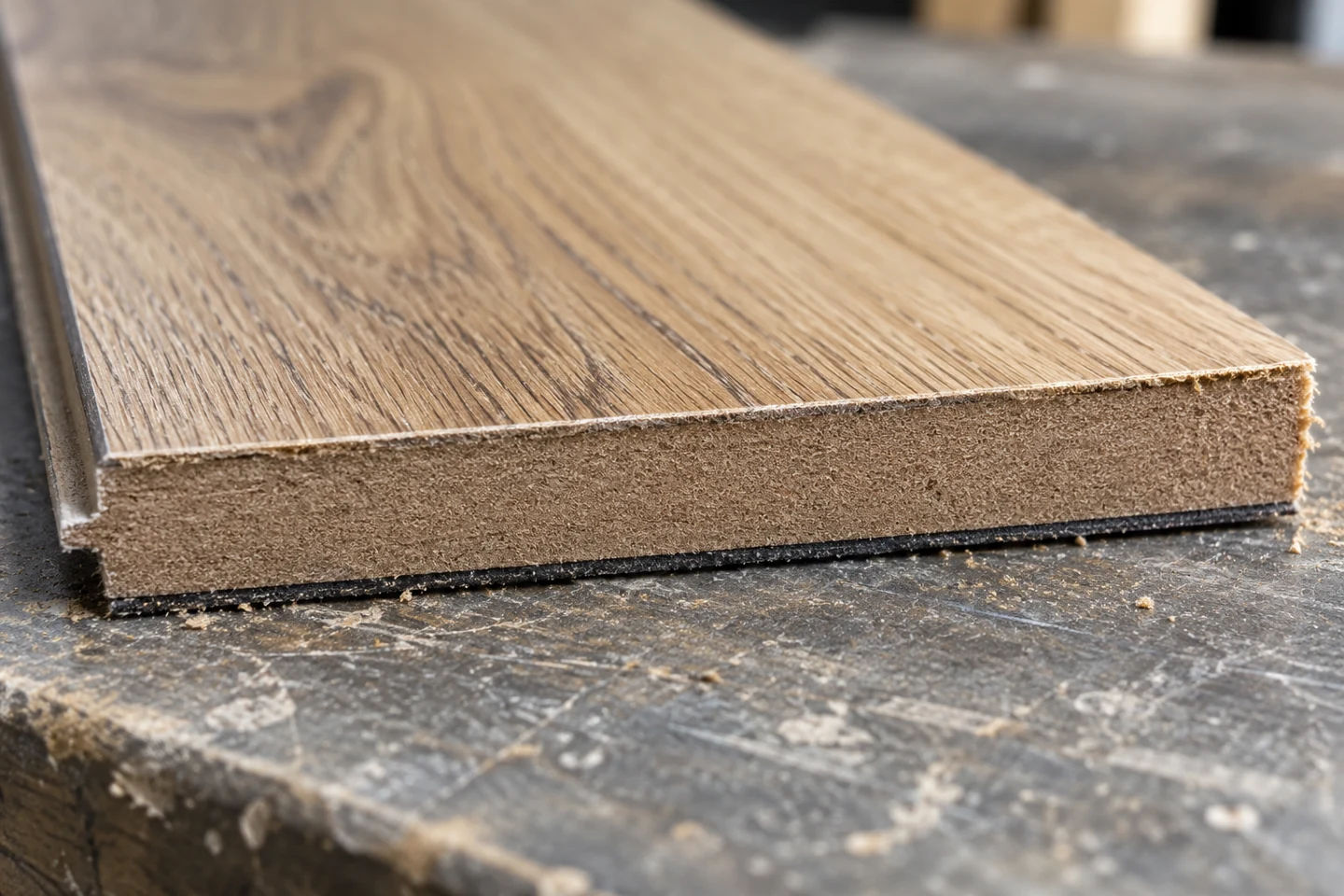
A typical laminate plank combines a protective surface, a decorative layer, a wood-based core and a balancing backer. HDF means high-density fiberboard, a common core material. Its compressed wood fibers provide the body of the plank; the wood-grain appearance comes from the decoration above it.
Scroll horizontally to view all columns.
| Part of a typical plank | Function | Selection check |
|---|---|---|
| Protective surface | Takes contact and abrasive wear above the decoration | Read the declared abrasion class and its test basis |
| Decorative layer | Supplies the color, grain or stone pattern, commonly through printed décor paper | Match the sample to the exact design code |
| Wood-based core, commonly HDF | Forms the rigid body and machined joint profile | Identify the core and the product’s moisture conditions |
| Balancing backer | Helps stabilize the layered board | Identify it separately from any attached underlay |
These functional layers follow NALFA’s What is Laminate? construction description and the EPLF laminate glossary. Products can use additional layers or different decorative processes, so the construction sheet remains the reference for an individual plank.
Underlay has a separate support and acoustic role and may be attached or supplied separately. The balancing backer belongs to the plank’s construction; an underlay or vapor-control accessory has its own installation requirements.
Wood-based cores respond to moisture by changing dimensions. Water reaching a joint or exposed edge can therefore matter even when the decorative face looks intact. For the implications of a real-wood wearable surface versus laminate’s decorative surface, see laminate versus hardwood flooring.
What does an AC wear class actually tell you?
AC is an abrasion class: it describes resistance to wearing through the surface in a specified laboratory test. The official ISO 24338:2022 abstract describes methods that abrade a specimen and count revolutions to a defined endpoint. Those cycles are laboratory measurements, rather than a prediction of footsteps or years of service.
NALFA’s LF 01-2026, Table 2-1, gives the following minimum abrasion requirements. Section 3.7 specifies ISO 24338 Procedure A.
Scroll horizontally to view all columns.
| NALFA usage level | Certification level | Minimum abrasion class | Minimum test cycles |
|---|---|---|---|
| Residential | 1 | AC3 | 2,000 |
| Light Commercial | 2 | AC3 | 2,000 |
| General Commercial | 3 | AC4 | 4,000 |
| Heavy Commercial | 4 | AC5 | 6,000 |
Source: NALFA LF 01-2026, Table 2-1, abrasion row. These minima apply within that edition’s certification requirements.
The first two levels share the same abrasion minimum. Their broader requirements still need to be checked: an AC3 label alone cannot establish NALFA certification or commercial-use approval. LF 01-2026 also evaluates properties such as impact resistance, thickness swelling and dimensional tolerances.
Likewise, a scratch from a sharp object is a different question from repeated abrasive wear. Read scratch, impact and moisture evidence separately. If the choice is between two flooring materials, the vinyl versus laminate comparison explains how to compare those properties.
Keep the AC rating distinct from a broader usage class such as 23 or 32. EPLF’s installation bulletin describes usage classes, while its extended DPL environmental declaration lists abrasion classes AC1–AC6. Compare each label with its declared standard and edition; an AC number is only one part of the product’s suitability record.
Where are the wet-area limits?
Bathrooms, laundry rooms and other frequently wetted areas require express manufacturer authorization for the selected laminate and its installation system. NALFA’s FAQ and EPLF’s Installation of Laminate Floor Coverings bulletin, June 2022, both place that decision with the product’s permissions and conditions.
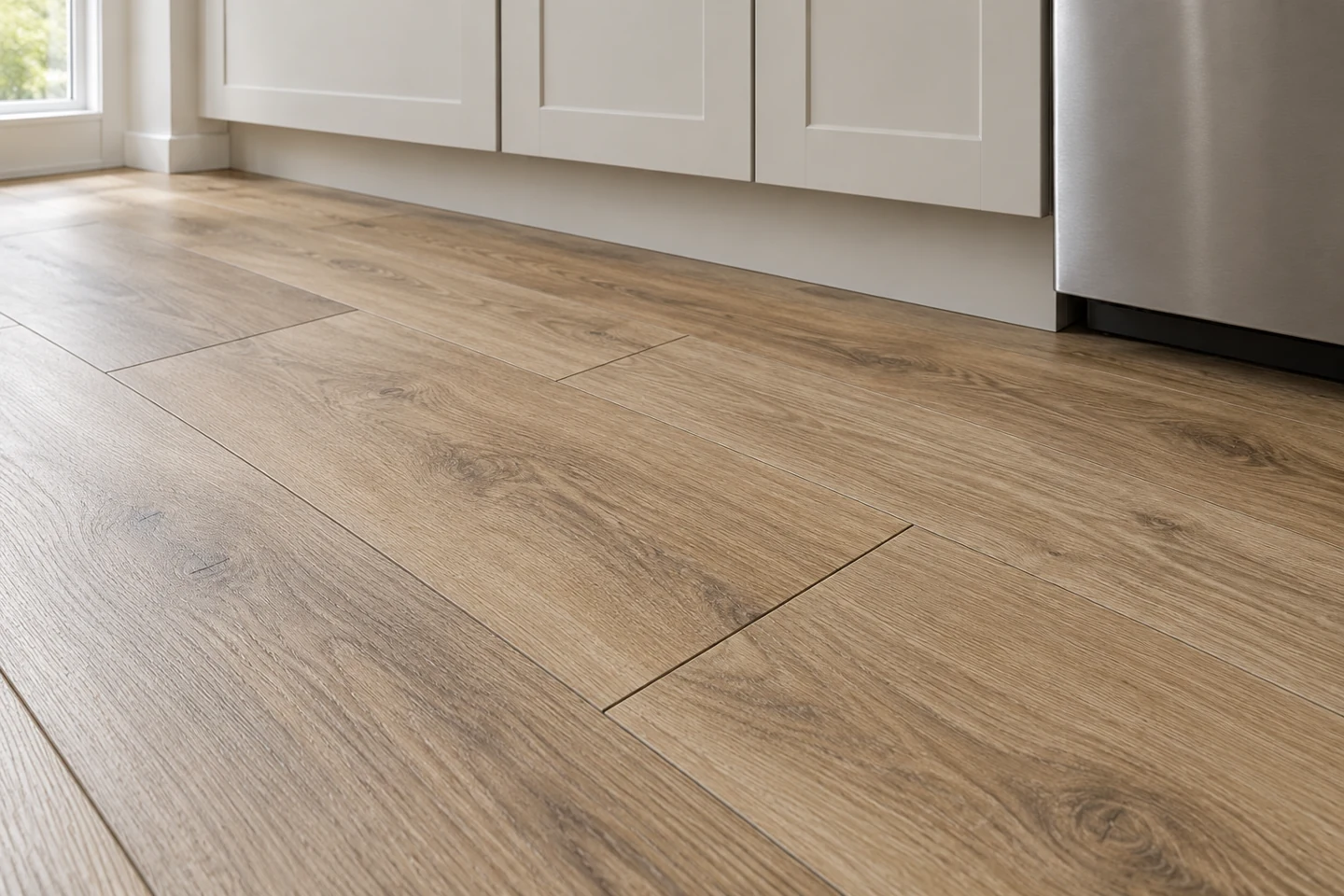
Screen the room by where the water comes from and how it reaches the floor, then match the product documents to that exposure.
Scroll horizontally to view all columns.
| Room or exposure | What governs the decision | What to establish before ordering |
|---|---|---|
| Normally dry living space | Declared use, substrate conditions and maintenance instructions | Suitability for the room’s traffic and cleaning routine |
| Kitchen with occasional surface spills | The exact surface-water claim and installation requirements | Covered exposure, cleanup conditions, joints and perimeter details |
| Bathroom, laundry or frequent wetting | Express room permission and the prescribed system | Required sealing/accessories, exclusions and permitted cleaning |
| Persistent standing water, leaks or moisture below the floor | Exposure-specific restrictions and substrate assessment | Resolve the moisture source and select a system expressly suited to the conditions |
A “water-resistant” or “waterproof” headline needs a defined scope. Read whether the promise covers the plank surface, assembled joints, perimeter and moisture from below. Check the stated exposure period, cleanup requirements and exclusions in the warranty for the exact SKU and market. Permission for household splashes does not extend automatically to flooding, a shower floor or a room with a drain.
The test distinction matters too. NALFA LF 01-2026 addresses thickness swell, while its separate Surface Swell—Assembled Joint method examines surface-water exposure at joined flooring. Abrasion, a cut specimen’s swelling and an assembled joint’s response describe different properties. Room approval must connect those properties to the installed floor.
If the manufacturer has not authorized the room’s exposure, leave that product off the shortlist. If an existing floor already has raised edges, gaps or noise, use the laminate flooring problems guide to investigate the installed conditions.
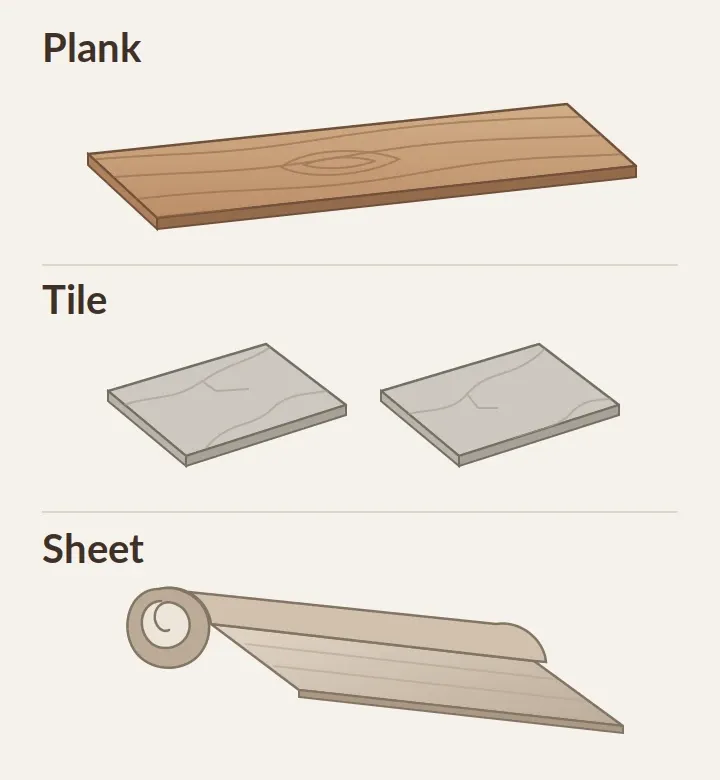
Can you buy laminate flooring in a roll?
Rigid wood-based laminate flooring comes as planks or tiles. A listing for “laminate flooring roll” needs a category check: the roll may be a flexible floor covering, underlay or a vapor-control accessory.
NALFA’s glossary defines laminate as a rigid floor covering. RFCI identifies sheet vinyl as a roll-supplied resilient flooring format. Check the listing’s material, format and intended role: an underfloor accessory goes beneath the finished floor, while sheet flooring is the walking surface. For roll-form vinyl, see the vinyl plank, tile and sheet guide.
How should you choose laminate flooring colors?
Choose the appearance from a physical sample in the intended room, then retain its exact design code. Laminate flooring colors come from the decorative surface: a name such as “oak” describes a wood look and does not establish a solid-oak construction, abrasion class or water rating.
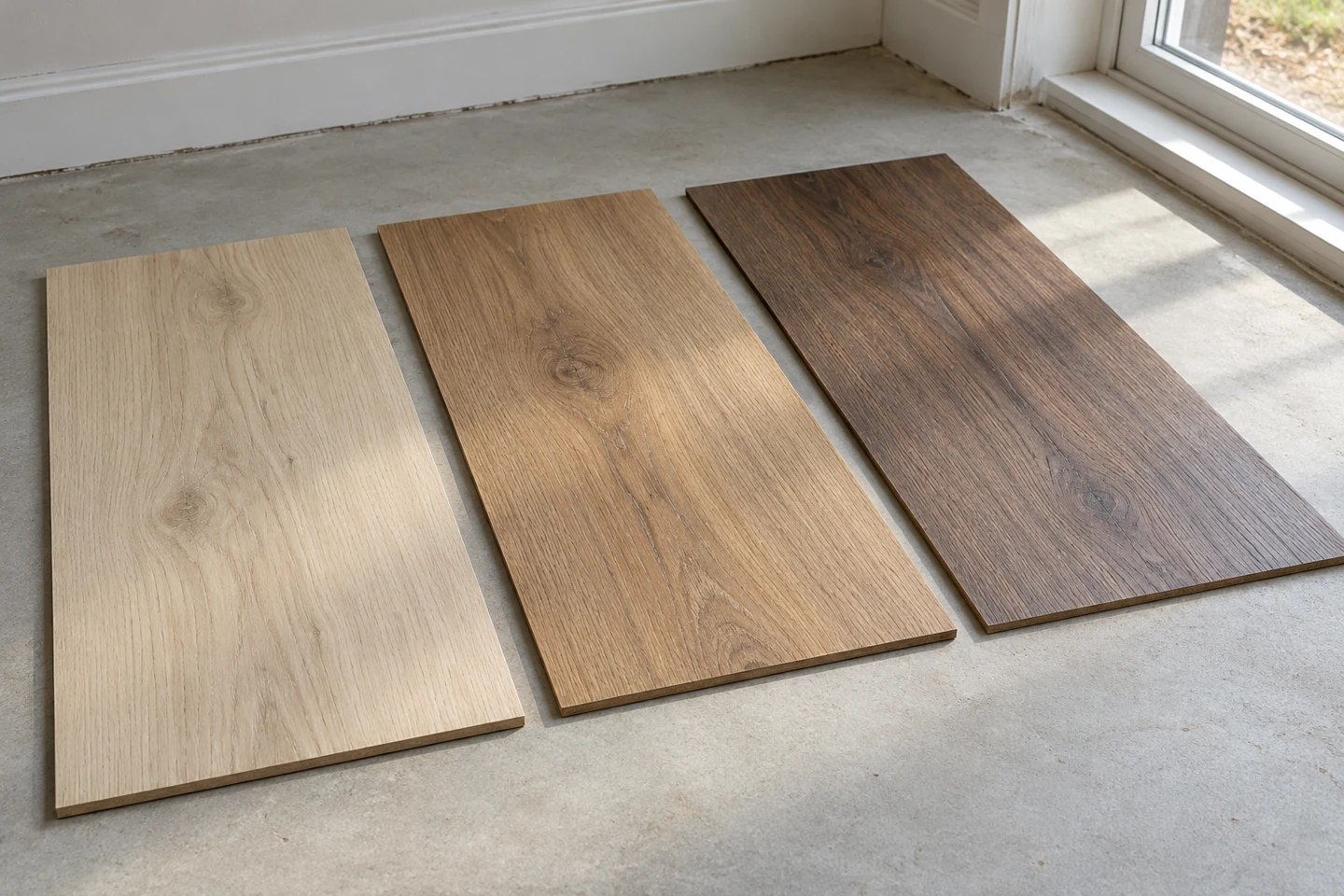
Put shortlisted samples beside the room’s fixed finishes, such as cabinets and wall paint. Look at them in daylight and under the lighting used in the evening; compare undertone, grain contrast, surface texture and gloss. When switching to another color or range, check that the new SKU has the required wear and water permissions too.
What should you record before choosing a product?
Keep a record for each exact product and room so that a color choice cannot silently replace the construction or performance specification. Download the laminate selection record (CSV) and fill it from the matching product documents.
Scroll horizontally to view all columns.
| Record group | Information to retain |
|---|---|
| Product identity | Manufacturer, range, SKU, market, plank/tile format and core construction |
| Wear and use | Declared AC, test standard/edition, usage class and any certification claim |
| Room and water | Intended room, express room permission, covered exposure, duration and exclusions |
| Installation | Joint/perimeter details, required accessories, underlay and vapor-control requirements |
| Substrate | Test method, acceptance limit and actual result, using the product’s instructions |
| Care and appearance | Cleaning conditions, sample/color code and room-light observations |
| Document trail | Technical sheet, installation manual and warranty names, dates and page references |
Start with the room permission and construction. Compare wear evidence among the products that meet those conditions, then choose the finish. Keep the completed record with the purchase documents so the installer and buyer are working from the same product specification.
Sources
- What is Laminate? — construction and layer functions — NALFA
- LF 01-2026 Laminate Flooring Specification and Test Methods — Table 2-1 and sections 3.2 and 3.7 — NALFA
- Laminate flooring FAQ — room permissions — NALFA
- Surface Swell—Assembled Joint — surface-water exposure and evaluation — NALFA
- Installation of Laminate Floor Coverings, June 2022 — core behavior, usage classes and frequently wetted rooms — EPLF
- Laminate glossary and extended DPL environmental declaration — construction terms and abrasion-class range — EPLF
- Resilient Flooring Types — sheet vinyl format — RFCI
- ISO 24338:2022 — Laminate floor coverings: Determination of abrasion resistance — International Organization for Standardization