Key takeaways
- EN 335 defines use classes (where the wood will be exposed); EN 350 classifies how durable a species is against decay. They answer different questions.
- EN 350 durability classes are an input to service-life estimates, not a guaranteed number of years.
- Install boards close to the moisture content they will reach in service so they do not shrink or swell excessively after fixing.
- Western Red Cedar can be fixed with hot-dipped galvanized, aluminum or stainless steel nails; stainless is the best choice under transparent finishes and near the sea.
- Fire requirements for combustible cladding vary by country, building type, height and code edition; check the adopted code and the product's classification or assembly test.
Wood cladding fails when the species, moisture or detailing is wrong for the wall. Match the timber’s durability or treatment to the exposure, install it near its in-service moisture content, drain and ventilate the cavity, and check the fire rules that apply to the building.
Timber is an anisotropic biological material that absorbs and releases moisture with the surrounding air. That makes it easy to work and attractive, and it also means service life depends on exposure, detailing and maintenance as much as on species.
Quick specification check
Scroll horizontally to view all columns.
| Item | Where the answer comes from | Why it matters |
|---|---|---|
| Exposure (use class) | EN 335 in Europe; AWPA use category in the US | Defines the service situation the wood must survive |
| Natural durability of the species | EN 350 class for the species and origin, heartwood | Decides whether untreated boards are suitable for that use class |
| Treatment or modification | Treater’s or producer’s documentation for the target use class | Brings less durable species up to the exposure |
| Moisture content at installation | Supplier data and local in-service conditions | Limits shrinkage, cupping and split fixings after installation |
| Cavity and ventilation | Cladding guidance for the region, e.g. TRADA in the UK | Lets the back face dry and drains water |
| Fasteners | Species or cladding maker’s installation guidance | Prevents corrosion and staining |
| Fire classification | Adopted building code; product classification report or assembly test | Combustible cladding is limited on some buildings |
Takeaway: Fill in every row for the project before comparing species or prices.
1. Durability Classes, Use Classes and Treatments
Two European standards are often confused:
- EN 335 defines five use classes, the service situations wood can be exposed to, and the biological agents relevant to each. Exterior cladding above ground and exposed to the weather sits in use class 3.
- EN 350 classifies the natural durability of wood species against decay fungi from class 1 (very durable) to class 5 (not durable), along with other organisms. The classification applies to heartwood; sapwood is normally treated as not durable. BSI describes EN 350 as an input to service-life prediction, so a durability class is not a fixed number of years.
Look up the class for the exact species and growing origin, because the same species can be rated differently depending on where it was grown. Species with lower natural durability can still be used outside when they are preservative-treated or thermally modified to suit the use class, using the treater’s or producer’s documentation for that use. In the US, the equivalent exposure language is the AWPA use category system.
Common mistake: Calling EN 335 a treatment grade, or quoting an EN 350 class as a guaranteed service life.
If no species or treatment fits the exposure and budget, compare fiber cement cladding or WPC wall panels.
Takeaway: Name the use class first, then choose a species or treatment documented for it.
2. Moisture Content at Installation
Boards installed much wetter or drier than their in-service condition move after fixing:
- Too wet: As the boards dry in place, shrinkage can open joints, cause checking at fasteners and pull tongue-and-groove joints apart.
- Too dry: Kiln-dried boards taken straight from indoor storage can swell in damp weather, leading to cupping and buckling.
Ask the supplier for the moisture content at delivery and the target range for your climate, and store boards on site off the ground, ventilated and protected from rain until fixing.
Takeaway: Measure moisture content at delivery and fix boards close to the condition they will live in.
3. Rainscreen Cavity and Detailing
The rainscreen principle separates the outer weather skin (the boards) from the air and thermal layers behind:
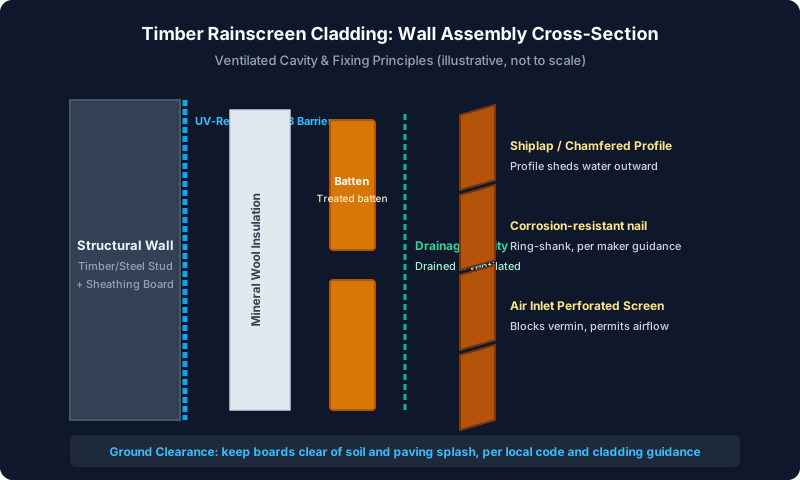
- Ventilation cavity: Keep a continuous drained and ventilated cavity behind the boards on treated battens, sized to the cladding guidance or code that applies to the project.
- Top and bottom openings: Provide air inlets at the base and outlets at the top, screened against insects, so the cavity can ventilate.
- Ground and splash clearance: Keep the bottom of the cladding clear of soil and paving splash so end grain does not stay wet; use the clearance the local code and cladding guidance require.
- End-grain sealing: Seal site-cut ends with an end-grain sealer or preservative compatible with the treatment and finish before fixing.
The wall cladding family overview compares substructures and flashing details across cladding types.
Takeaway: Drain and ventilate the back of every board, and keep the bottom edge out of splash.
4. Fire Safety: Rules Vary by Jurisdiction
Wood cladding is combustible, so fire rules depend on where you build, the building’s type and height, and the edition of the code in force:
- United States (IBC): Combustible exterior wall coverings on some construction types are limited by height and location, fire-retardant-treated wood has its own provisions, and NFPA 285 assembly testing is triggered by certain combustible components depending on construction type and height. Check the adopted IBC edition, local amendments and exceptions with the building official.
- Europe and the UK: Reaction to fire is classified under EN 13501-1, and national regulations set the class required for the building’s height and use. Fire-retardant treatments can improve the class achieved; the product’s classification report states the class for the tested thickness, profile and mounting.
- ASTM E84 flame spread results describe a material’s surface burning, not the behaviour of a complete exterior wall.
Common mistake: Applying one country’s height threshold or required class to a building in another jurisdiction.
Where wood is restricted, metal wall panels and fiber cement vs metal cladding cover the usual non-timber alternatives and their fire evidence.
Takeaway: Confirm the required fire classification or assembly test for the project before choosing the board.
5. Fasteners
Corrosion-resistant fasteners prevent staining and failure:
- Western Red Cedar: The Western Red Cedar Lumber Association lists hot-dipped galvanized, aluminum and stainless steel nails as suitable. Stainless steel is the best choice, especially under transparent stains; use 304 stainless for general siding and 316 for seacoast exposures. Plain steel nails can rust and react with the natural oils in cedar, causing stains and streaks, and copper nails also react with cedar.
- Oak and other tannin-rich species, and treated timber: Follow the timber supplier’s or treater’s fastener guidance; stainless steel is the usual safe choice.
- Length and spacing: For cedar siding on stud walls, the association recommends nails long enough to pass through sheathing and insulation and penetrate at least 1-1/4 in. (32 mm) into the studs or furring strips that hold the nail; foam sheathing provides no nail holding. It gives separate guidance for furring on masonry walls. Use ring- or spiral-shank nails for holding power, and nail each board independently so it can move.
Takeaway: Pick fasteners from the species or cladding maker’s guidance, and step up to 316 stainless near the sea.
6. Alternatives and Next Steps
Specifiers often compare natural timber with engineered alternatives:
- Composite and cementitious options: Compare against fiber cement cladding, metal wall panels and WPC wall panels to weigh coating maintenance against first cost.
- Side-by-side trade-offs: See fiber cement vs metal cladding for movement, weight and fire behaviour.
- Envelope applications: See how wood performs among the best materials for exterior walls.
- System overview: The wall cladding family overview covers substructures, flashing details and substrate compatibility across cladding types.
- Selection method: How to choose building materials sets out the order of decisions for any envelope material.
Takeaway: Shortlist wood only after the exposure, fire and maintenance requirements are clear.
When this does not apply
- Interior timber panelling, which is not exposed to the weather and follows interior finish rules.
- Members actually in contact with soil or fresh water, which fall in a higher use class.
- Engineered or composite “wood-look” boards; follow the maker’s own installation and fire documentation.
Takeaway: Check that your wall is an exterior, above-ground timber rainscreen before applying this guide.
Key performance characteristics
Scroll horizontally to view all columns.
| Property | Typical range | Basis |
|---|---|---|
| Natural Durability Class | Class 1 (very durable) to Class 5 (not durable), heartwood; check the species and origin | EN 350 |
| Use Class for Exterior Cladding | Use class 3 (above ground, exposed to weather); confirm the sub-class for the detail | EN 335 |
| Installation Moisture Content | Close to the expected in-service moisture content; confirm with the supplier | Supplier and cladding guidance for the region |
| Fire Classification | Varies by jurisdiction, building type and height; confirm the required class or test | Adopted building code; EN 13501-1 in Europe; IBC and NFPA 285 where applicable in the US |
| Fastener Material | Hot-dipped galvanized, aluminum or stainless steel for Western Red Cedar; higher-grade stainless near the sea The association recommends Type 304 stainless for general siding and Type 316 for seacoast exposures. | Western Red Cedar Lumber Association installation guidance |
Ranges are indicative and vary by product formulation, grade and thickness. Confirm values against the current manufacturer documentation for the product actually being supplied, and verify the applicable local codes.
Frequently asked questions
What is the best material for cladding?
There is no single best material. Wood suits projects that accept periodic maintenance and want a natural finish; fiber cement, metal and porcelain trade that for different weight, fire and maintenance profiles. Choose by exposure, fire requirement, budget over the wall's life and the substrate.
What are the disadvantages of cladding?
For wood cladding, the main drawbacks are maintenance of finishes, movement with moisture, decay risk where boards stay wet, and combustibility limits on some buildings. Ventilated timber rainscreens also need a drained cavity and careful flashing; other cladding systems follow their own code and manufacturer details.
What are the different types of cladding materials?
Common types are wood (natural, treated or thermally modified), fiber cement, metal panels, porcelain and stone, and wood-plastic composite. Each has its own fixing system, cavity requirements, fire evidence and maintenance routine, so compare whole systems rather than face materials.
What is the best exterior wall cladding material?
It depends on the building's exposure, fire requirements, budget over its life and how much maintenance the owner accepts. Wood suits projects that want a natural finish and accept periodic refinishing; where combustible cladding is restricted or maintenance must be minimal, non-combustible or low-maintenance systems are usually shortlisted instead.
What is the cheapest type of cladding?
First cost depends on the product, region, substructure and labor, so compare quotes for the same wall area and detail. For wood, also price the finish maintenance over the wall's life, because a low first cost can be overtaken by repeated refinishing.
Is wall cladding expensive?
The cladding boards are only part of the cost; battens, membranes, flashings, fixings, scaffolding and labor often add as much again, and fire or acoustic requirements can change the system. Get itemized quotes that include the full wall build-up.
Sources
- BS EN 350:2016 Durability of wood and wood-based products — Testing and classification of the durability to biological agents — BSI Accessed October 7, 2026.
- BS EN 335:2013 Durability of wood and wood-based products — Use classes — BSI Accessed October 7, 2026.
- NFPA 285: Standard Fire Test Method for Evaluation of Fire Propagation Characteristics of Exterior Wall Assemblies Containing Combustible Components — National Fire Protection Association Accessed October 7, 2026.
- ASTM E84: Standard Test Method for Surface Burning Characteristics of Building Materials — ASTM International Accessed October 7, 2026.
- Western Red Cedar siding: pre-installation (fasteners) — Western Red Cedar Lumber Association Accessed October 7, 2026.
- EN 350: Durability of wood and wood-based products — Testing and classification of the durability to wood-destroying organisms — European Committee for Standardization
- EN 14915: Solid wood panelling and cladding — Characteristics, evaluation of conformity and marking — European Committee for Standardization
- External timber cladding (TRADA publication) — Timber Research and Development Association